
The Short Answer
If your garage door starts closing and then reverses back up, or refuses to leave the top of the track at all, the opener's safety system is doing exactly what it was built to do: stopping on something it thinks is in the way. The door itself is rarely the real problem. Almost always it's a sensor, a setting, or a worn part feeding the opener bad information. Here's the order a technician works through, cheapest and fastest checks first.
What You're Actually Seeing
"Won't close" shows up a few different ways, and the exact symptom narrows down the cause before anyone touches a tool:
- Door reverses a few inches above the floor, every time
- Door touches the floor, then immediately pops back open
- Door won't move downward at all when you press the button, though it opens fine
- Door closes only when you hold the wall button down, but not with the remote
- The opener's light blinks a set number of times when it reverses (a built-in error code worth noting before you call anyone)
Write down which of these matches your door. It saves diagnostic time, whether you're troubleshooting yourself or describing the problem over the phone.
Checking the Causes, in the Order a Technician Would
1. Safety Sensors (Photo Eyes)
This is the first thing any technician checks, because it's the most common cause by a wide margin. The two small eyes mounted near the floor on each side of the track have to be perfectly aligned and have a clear line of sight. If one is bumped, coated in dust, or has a cobweb across the lens, the opener assumes something is blocking the door and refuses to close or reverses on the way down. Afternoon downpours can leave water droplets or condensation on the lenses, which has the same effect as an actual obstruction. The fix is usually just wiping the lenses and nudging the brackets until both indicator lights glow steady rather than flickering. In homes near the coast, salt air corrodes the sensor wiring and mounting brackets over time, which can cause intermittent faults that look random until the connection finally fails for good — that's a wiring repair, not a realignment.
2. Close-Limit or Travel Settings
If the sensors check out, the next stop is the opener's travel limit settings. These tell the motor how far to run before it decides the door has hit the floor. If the limit is set too short, the opener thinks the door has landed when it's still a few inches up, strains against resistance, and reverses as a safety response. This is common after a door has been adjusted, after a new opener install, or after seasonal humidity causes a wood or wood-composite door to swell slightly and sit differently than it did in drier months. Resetting the limits is usually a quick adjustment, but if the door keeps drifting out of spec, it points to a mechanical issue underneath that setting rather than the setting itself.
3. Track Alignment and Rollers
Next, a technician checks the tracks themselves for gaps, dents, or spots where they've pulled away from the wall. A bent track or worn, cracked roller creates resistance partway down the run, and the opener reads that resistance as an obstruction. Humidity and swelling are a real factor here too, especially with panels that expand slightly during the wet season and bind against the track or weatherstripping. The fix ranges from simply bending a track back into place and tightening brackets, to replacing rollers that have worn out of round, to adjusting the track spacing so the door runs freely top to bottom.
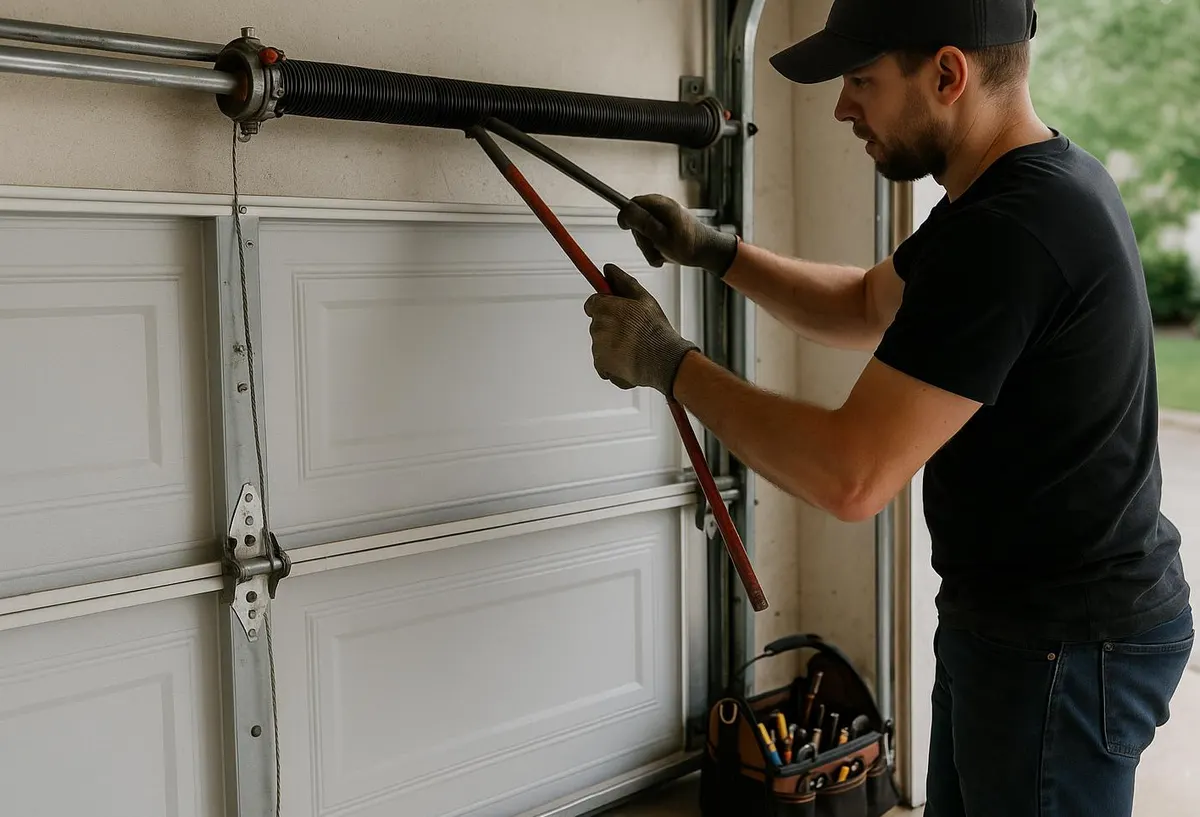
4. Springs and Cables
A door that's heavy on one side, slams partway through its cycle, or makes the opener work audibly harder than normal often has a weakening spring or a cable starting to fray. Wind-load-rated doors, which are common along this stretch of coast because of hurricane season building codes, are heavier than standard doors and put more strain on springs as they age. An unbalanced door throws off the opener's force sensing, and it reverses to protect the motor and the door panels. Spring and cable work involves releasing stored tension safely and replacing the worn parts — not a DIY repair, since torsion springs are under enough force to cause serious injury.
5. Opener Logic Board and Gearing
If everything mechanical checks out, the last stop is the opener itself. Internal gears wear down, circuit boards age, and force-sensing settings can drift on their own over years of use. Salt air and the usual humidity in a garage that isn't climate controlled accelerate corrosion on circuit boards and connectors faster than it would happen further inland. At this point the choice is between a board repair or a full opener replacement, and that decision usually comes down to the age of the unit and whether parts are still available.
When to Call Inlet Beach Overhead Garage Door
If you've wiped the sensors, checked for obvious obstructions, and the door is still reversing or won't close, it's time to call in a technician rather than keep adjusting settings by trial and error. We handle this exact complaint regularly across Inlet Beach, Rosemary Beach, and the rest of the 30A corridor, and we check it in the same order outlined above so we're not guessing or replacing parts that don't need it. Our Garage Door Repair service covers sensor, track, and limit-setting issues in a single visit, and if the root cause turns out to be a weak or broken spring, our Spring Replacement service gets the door back in balance safely, with the correct spring rated for your door's weight and your local wind-load requirements.
A door that won't close reliably is a security gap and, heading into the rest of hurricane season, a wind-load risk too. Call Inlet Beach Overhead Garage Door and we'll get it diagnosed and fixed, usually in one trip.